







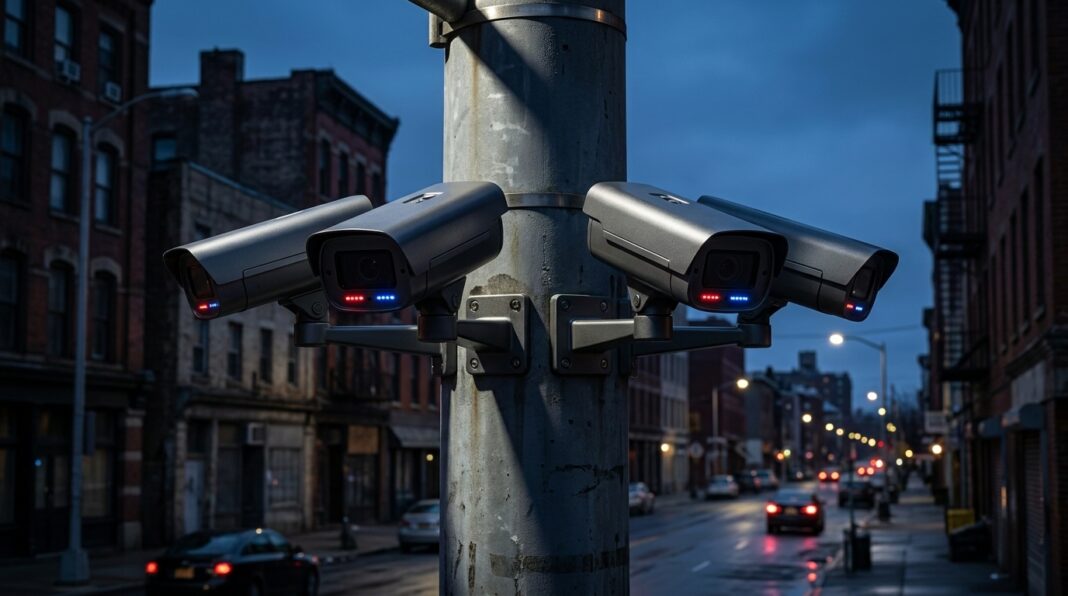

Backlash against Flock Safety’s AI-powered license plate cameras has grown, with vandalism of cameras and bipartisan concern in Congress. Senator Bernie Sanders said he would introduce legislation to stop AI mass surveillance, while House Republicans led by Representative Tim Burchett introduced a bill barring federal purchases and Senator Josh Hawley opened a Senate inquiry. About one-third of the 7,000 agencies using Flock’s system had enabled optional Audit Assistance, and the Washington Post found at least 69 police officials accused, charged or convicted of misusing Flock or similar plate readers.
U.S. lawmakers in both the House and Senate have taken visible legislative and investigatory steps in response to the deployment of AI-powered license plate cameras, reflecting bipartisan concern in Congress. Senator Bernie Sanders said he would introduce legislation to stop “AI mass surveillance”, using that phrase to characterize the technology. In the House, Republicans led by Representative Tim Burchett introduced a bill that would bar the federal government from buying Flock cameras, directly targeting federal purchases. Separately, Senator Josh Hawley opened a Senate inquiry into the systems, initiating a formal oversight process at the Senate level. Together these actions amount to both proposed legislation and congressional oversight focused on Flock’s AI-powered license plate cameras.
Garrett Langley, Flock Safety’s CEO, has framed the debate over the company’s AI‑powered license plate cameras as one requiring compromise rather than an either/or choice between privacy and safety, and he said framing the issue as privacy versus safety is prioritizing the wrong thing.
Langley argued that an outright ban would be “like banning vehicles” and called for fixes to data retention policies and stronger officer accountability measures. Flock adjusted its recommended data retention period to seven days, compared with a state limit of 21 days.
Six days before a Washington Post story, Flock announced it would require all law enforcement customers to enable its Audit Assistance feature by year‑end; the feature had been optional since April and about one‑third of the roughly 7,000 agencies using the system had already switched it on.
The Washington Post reported that at least 69 police officials were accused, charged or convicted of misusing Flock or similar plate readers. In at least 15 of those cases, the person who spotted the misuse was outside the department, such as a victim, activist or journalist. Three officers were identified by analyzing public search logs. Six days before the Post story, Flock announced it would require all law enforcement customers to enable its Audit Assistance feature by year‑end; the feature had been optional since April and about one‑third of the roughly 7,000 agencies using the system had already switched it on.
A WIRED investigation reported that Flock built an AI tool that can identify drivers from movement patterns alone, with no license plate or name needed to begin a search. Reporting also raised concerns about data retention and officer accountability in the use of the technology. Flock lowered its recommended data retention period to seven days, compared with a state limit of 21 days.
The debate over AI‑powered license plate cameras centers on tensions between public safety uses and privacy risks, highlighted by reports of misuse, congressional scrutiny, and public pushback. Stakeholders and officials have emphasized the need for regulatory fixes and stronger accountability measures to address data retention, audit practices and law enforcement searches while balancing operational uses of the technology.