






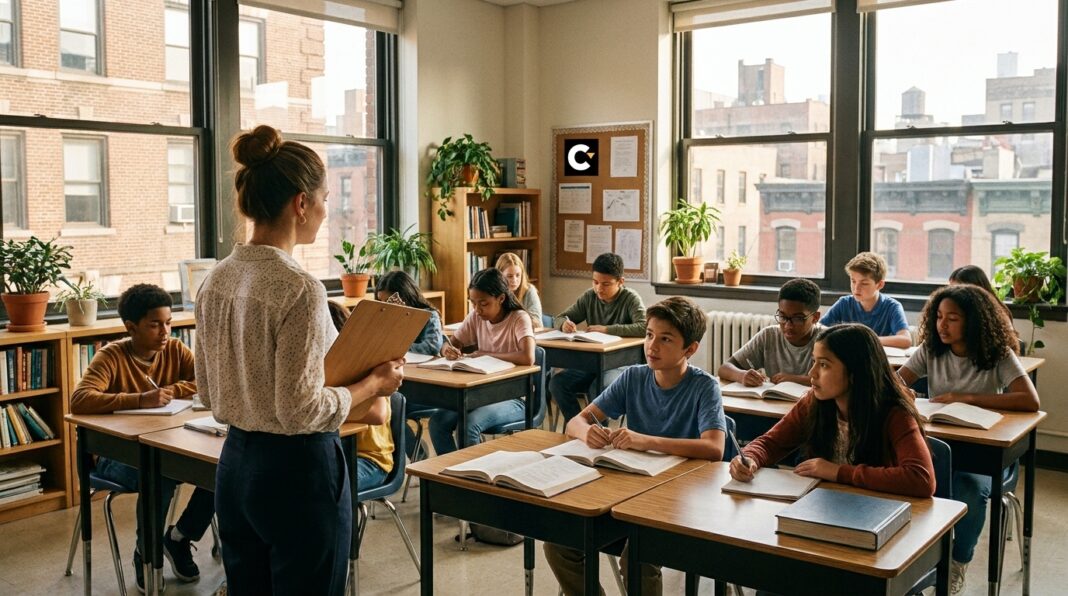

NYC generative AI moratorium in schools (one-year): New York City has imposed a one-year moratorium on generative AI use in public schools for students in grades 2-K through eighth grade. The prohibition affects nearly 600,000 students across the city’s public school system, representing about two-thirds of total enrollment. The moratorium is scheduled to begin with the 2026–27 school year.
The moratorium imposes a complete ban on all software with student-facing generative AI for students in grades 2-K through eighth grade. Companion chatbots are prohibited in every grade, including high school. High school access is restricted to narrowly defined pilot programs with numerical and classroom limits.
Up to 50,000 high school students, roughly five percent of the system, are permitted to use vetted generative AI tools as part of those pilots, and access is limited to a maximum of five classes per school. Quill is designated for English classrooms and will be used for no more than 15 minutes per week. Edia is designated for math coaching and will be used for 20 minutes per use. Intel AI-Ready Schools is limited to one period a week on semester-long projects. Brisk Teaching and Playlab occupy the remaining pilot slots, with Playlab capped at two assignments per marking period.
Screen-time restrictions are tightened under the moratorium: use for second grade and below is limited, while caps for grades three through five are set at 30 minutes per day and caps for grades six through eight are set at 45 minutes per day. Exceptions to the bans and caps cover assistive technology for students with disabilities, multilingual learners, and career-readiness programs such as computer science. The policy distinguishes prohibited student-facing tools from permitted, time-limited pilot uses in high school.
Taken together, these measures define distinct prohibitions for K-8 and tightly constrained pilots for high school students. The restrictions specify which tools are permitted in pilots and place concrete time and assignment limits on their classroom use. The moratorium establishes clear boundaries for student-facing generative AI in the district’s schools.
High school students will sit two 45-minute AI literacy modules per year as part of the moratorium’s measures. The modules cover what AI is, bias, risks, ethics and career impacts. The literacy sessions are scheduled alongside limited, vetted high school pilot programs that permit restricted classroom use of generative AI tools. The plan frames AI literacy as a required instructional component for participating students.
A Technology in Schools Coalition will assess the moratorium and the pilot programs and publish recommendations for later years. Every technology tool used in the district will be reviewed and may be dropped if it is not mission-critical to learning. The policy includes exceptions for assistive technology for students with disabilities, multilingual learners and career-readiness programs such as computer science. Julie Samuels welcomed career-readiness access and suggested expanding it beyond an hour a week.
The moratorium applies a cautious, education-focused, policy-driven approach that prioritizes student learning and safety by banning student-facing generative AI across early grades while restricting companion chatbots districtwide and limiting high school access to narrowly defined, vetted pilot programs.
The policy also mandates AI literacy instruction for high school students covering what AI is, bias, risks, ethics and career impacts, requires regular review of every technology tool with removal if not mission-critical to learning, and preserves targeted exceptions for assistive technology, multilingual learners and career-readiness programs.