








AI data centers water risk limits and freshwater withdrawals
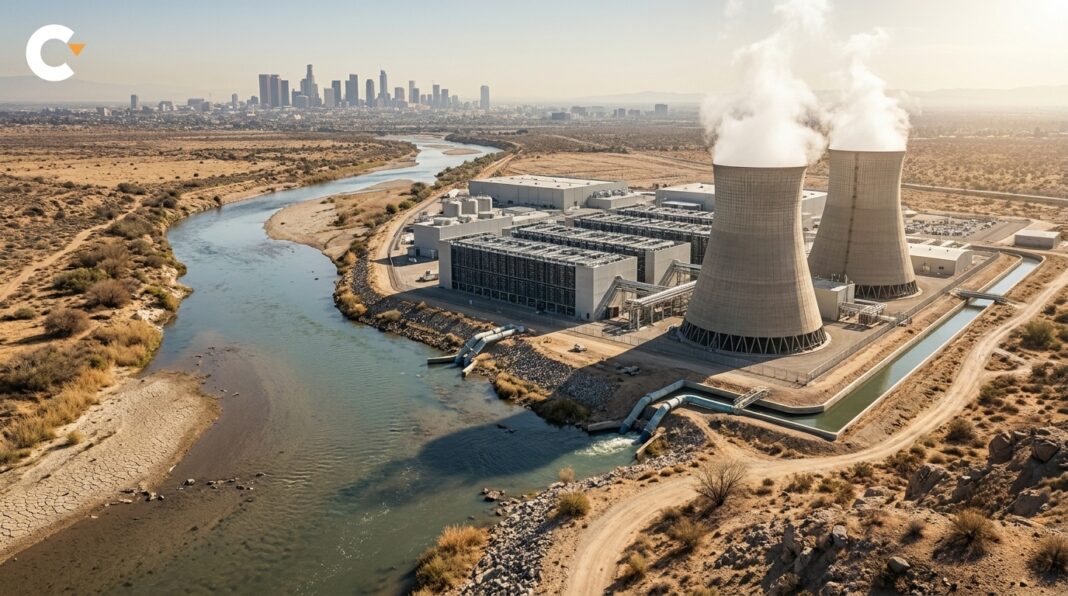
AI data centers water risk limits are receiving attention because power plants serving data centers withdraw about 3.4 trillion gallons of freshwater annually, equal to 10.4 million acre-feet. That withdrawal exceeds California’s average annual urban water demand of 8 million acre-feet and is about 12 times the combined annual water use of Los Angeles, Phoenix, and Washington, D.C. The study also reported that 66% of the power plants that use water in the relevant states were exposed to medium to high water stress.
Local governments in the United States are responding to the water risks associated with AI data centers by implementing various regulatory measures. The Austin City Council has unanimously voted to draft rules that may limit or exclude new data centers. These rules are expected to be considered in the first phase of the ordinance by December.
In San Marcos, Texas, zoning laws now bar data centers, illustrating a more direct approach to curbing their establishment. Similarly, Durham, North Carolina, and Cave City, Kentucky, have imposed moratoriums on new data centers, halting their development until further notice. Additionally, Jersey City, New Jersey, has prohibited the use of industrial property primarily for data centers.
These actions demonstrate a growing trend among local governments to manage the environmental impact of data centers, with concerns about water usage and sustainability at the forefront of these decisions.
Protests against large-scale data centers have included arrests, with at least 37 Americans detained during demonstrations in 2026. Those detentions occurred amid growing public concern over the local environmental and water impacts of data center development. Civic mobilization has coincided with a wave of municipal actions such as zoning changes, moratoriums, and council votes aimed at limiting or excluding new facilities. These local responses have unfolded alongside broader regulatory and political debates at multiple levels of government.
“Overall, we saw that 66% of the power plants that use water in those states were exposed to medium to high water stress,” Kristen James, senior program director for water at Ceres, said in a statement.
The push to address those risks has expanded beyond local ordinances and has reached state legislatures. “While Gov. Greg Abbott can only offer performative and mostly voluntary measures, local leaders are acting to protect the community from large-scale data centers,” Kaiba White, an Austin-based climate policy specialist for Public Citizen, said in a statement. Those quotations have been cited in local debates contrasting state-level responses and municipal actions.
The socio-political landscape therefore includes citizen protests and arrests, municipal rulemaking, and initiatives at state legislatures. Public statements from advocacy groups and local specialists have framed the debate around water stress and the relative roles of local and state governments.