







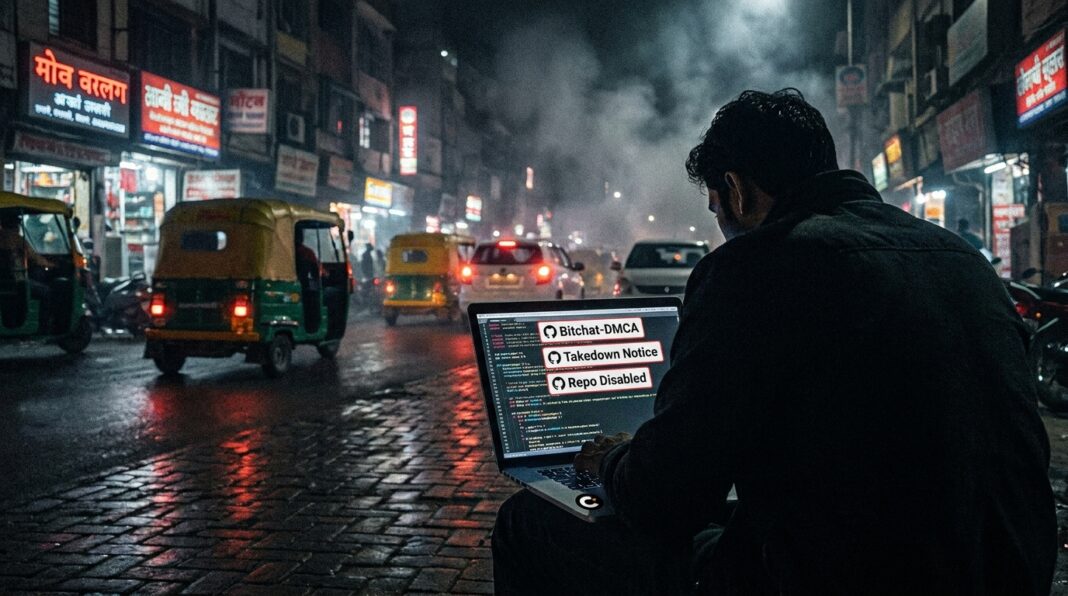

India ordered GitHub to remove access to three Bitchat repositories linked to Jack Dorsey and Block, setting a three-hour removal deadline. The order was issued by the Indian Cyber Crime Coordination Centre and named the three repositories under the permissionlesstech account (main project, Android build, Android releases page). The takedown followed protests under the Cockroach Janta Party banner that spread across Indian cities around July 20, during which researchers reported protesters using Bluetooth mesh apps including Bitchat to coordinate during internet shutdowns.
Bitchat is an offline, encrypted messaging application created by Jack Dorsey and associated with Block. The app relays encrypted messages between phones using Bluetooth mesh networks and operates without internet connectivity, centralized servers, or user accounts. Researchers reported that protesters used Bluetooth mesh apps, including Bitchat, to coordinate during internet shutdowns around July 20 protests.
The Indian Cyber Crime Coordination Centre (I4C) issued an order under Section 79(3)(b) of the IT Act directing GitHub to remove access to three Bitchat repositories within three hours. The order named three repositories under the permissionlesstech account: the main project repository, an Android build repository, and an Android releases page. The order argued that Bitchat enables anonymous communication without registration or centralized logging and that this significantly impedes lawful interception, attribution, and investigation by law enforcement agencies. GitHub has previously removed repositories under Indian orders, and open-source projects are often mirrored elsewhere.
After the takedown order, Bitchat repositories were mirrored to GitLawb. The Internet Freedom Foundation condemned the order as unconstitutional and authoritarian.
Around July 20, protests under the Cockroach Janta Party banner occurred across various Indian cities. These protests coincided with repeated internet suspensions, particularly in New Delhi. During these disruptions, researchers noted that protesters utilized Bluetooth mesh applications, including Jack Dorsey’s Bitchat, to coordinate their activities. This method allowed for communication in the absence of internet access, using offline, encrypted messaging over mesh networks.
In response to these events, the Indian government took measures to limit the use of such technologies by ordering the removal of Bitchat repositories from GitHub. These actions parallel previous restrictions, such as China’s decision to ban Bitchat from Apple’s App Store in April. The Indian authorities cited concerns that apps like Bitchat might hinder lawful interception and investigation efforts by enabling anonymous communication without registration or centralized logging.
Responses to the takedown order included a public post from Jack Dorsey stating that the Indian government opposes technologies like Bitchat. The Internet Freedom Foundation condemned the order as unconstitutional and authoritarian. The record shows GitHub has complied with previous Indian takedown orders, and open-source projects are often mirrored elsewhere; following the crackdown, Bitchat repositories were mirrored to GitLawb. Block launched Buzz as a decentralized platform after the repositories were targeted.
Civil society condemnation and open-source mirroring reflected broader pushback against the removal. The episode coincided with other restrictions on Bitchat in other jurisdictions.
India ordered GitHub to remove access to three Bitchat repositories linked to Jack Dorsey and Block amid protests and repeated internet suspensions around July 20. The Indian Cyber Crime Coordination Centre cited concerns that the offline, encrypted Bluetooth mesh app enabled anonymous communication that impeded lawful interception, attribution and investigation, and the Internet Freedom Foundation condemned the order as unconstitutional and authoritarian. The takedown came alongside other restrictions, including China’s removal of Bitchat from Apple’s App Store, and mirrored copies and alternative decentralized projects were made available after the repositories were targeted.