








Eli Lavon, a 21-year-old American citizen residing in Israel, has been formally indicted on espionage charges alleging he acted as a spy for Iran. The criminal case is reported to have begun in November 2025 and is the subject of the current indictment. Prosecutors say Lavon received roughly $1,379 in combined cryptocurrency payments for material he provided during the period described in the indictment.
The State Attorney’s Office filed an indictment charging Eli Lavon with espionage-related offenses. Lavon, a 21-year-old American citizen studying at an ultra-Orthodox seminary in Jerusalem, is charged with two counts of contact with a foreign agent and 14 counts of communicating information that could benefit an enemy. Prosecutors state the case began in November 2025 in the United States when Lavon was visiting relatives and responded to a Telegram job posting. The indictment describes the alleged contacts, communications and payments as the basis for the counts brought by prosecutors.
The indictment was lodged by the State Attorney’s Office and sets out the legal counts detailed above. The document constitutes the formal criminal charge against Lavon under Israeli law.
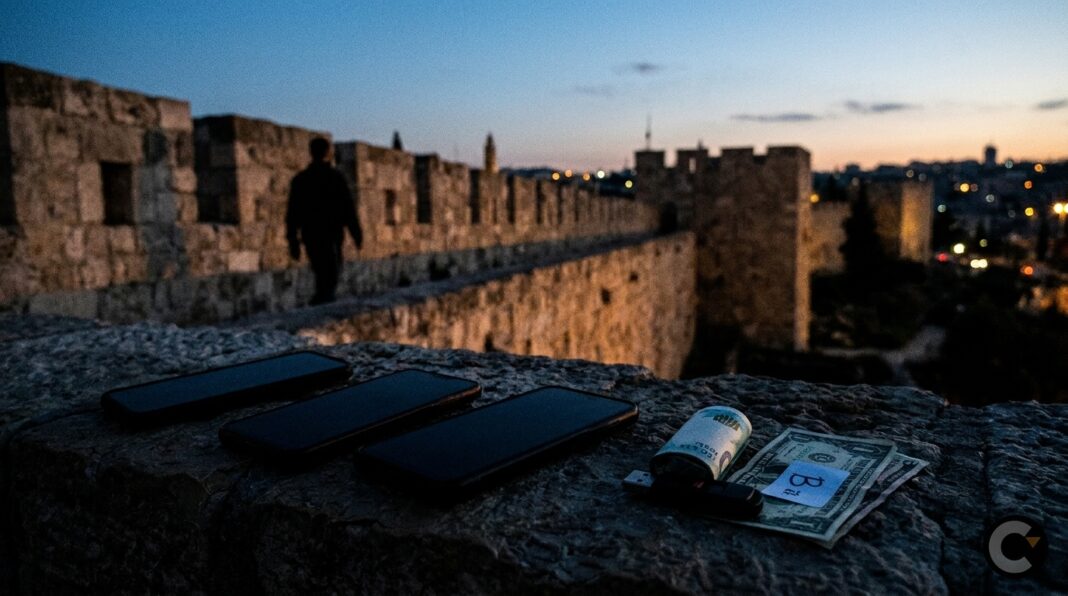
Prosecutors say the case began in November 2025 when Eli Lavon, then visiting relatives in the United States, responded to a Telegram job posting and, about a month later as he returned to Israel, someone claiming to represent Iranian intelligence began directing him to surveillance tasks. The indictment alleges those tasks included filming an abandoned building in a religious Jerusalem neighborhood and recording footage inside a grocery store. It says Lavon was instructed to conceal a cigarette pack containing a note reading “The job is complete” in a trash can at a Jerusalem shopping mall. The document states he communicated through two Telegram accounts and used three phones while being paid in cryptocurrency for the material provided.
After that contact was cut off, the indictment alleges Lavon began communicating with a second Iran-linked handler who directed additional actions, including hiding a flash drive wrapped in currency at a restaurant and sending a photograph of his passport. The second handler is said to have pressed Lavon for names of fellow seminary students, which the indictment reports Lavon declined to provide. The indictment describes these interactions as the basis for the espionage-related counts.
Prosecutors said the indictment illustrates how foreign intelligence agencies attempt to exploit the digital sphere to identify, recruit, and operate individuals from within Israel. The indictment includes a prosecutorial statement that reads, “This indictment illustrates how foreign intelligence agencies attempt to exploit the digital sphere to identify, recruit, and operate individuals from within Israel, and how important it is to remain vigilant and immediately sever contact when approached in this manner.” Prosecutors stressed the importance of remaining vigilant and immediately severing contact when approached by foreign actors. Prosecutors said Lavon was paid in cryptocurrency and that his combined payments from both handlers totaled roughly $1,379.
The indictment was filed by the State Attorney’s Office and sets out the alleged operational methods and communications. Since 2023, Israel has indicted roughly 60 people on Iran-related espionage charges. Prosecutors stated that some sites surveilled by such recruits were later struck in Iranian missile attacks. The prosecution presented those broader developments as contextual background for the charges against Lavon.
Prosecutors framed the case as an example of digital exploitation by foreign intelligence. The indictment is a formal criminal charge filed by the State Attorney’s Office in that broader series of Iran-related cases.
Eli Lavon, a 21-year-old American citizen studying at an ultra-Orthodox seminary in Jerusalem, has been indicted on espionage charges alleging he spied for Iran and received cryptocurrency payments. The indictment filed by the State Attorney’s Office describes surveillance activities in Jerusalem and related communications and payments that form the basis of the criminal charges.