







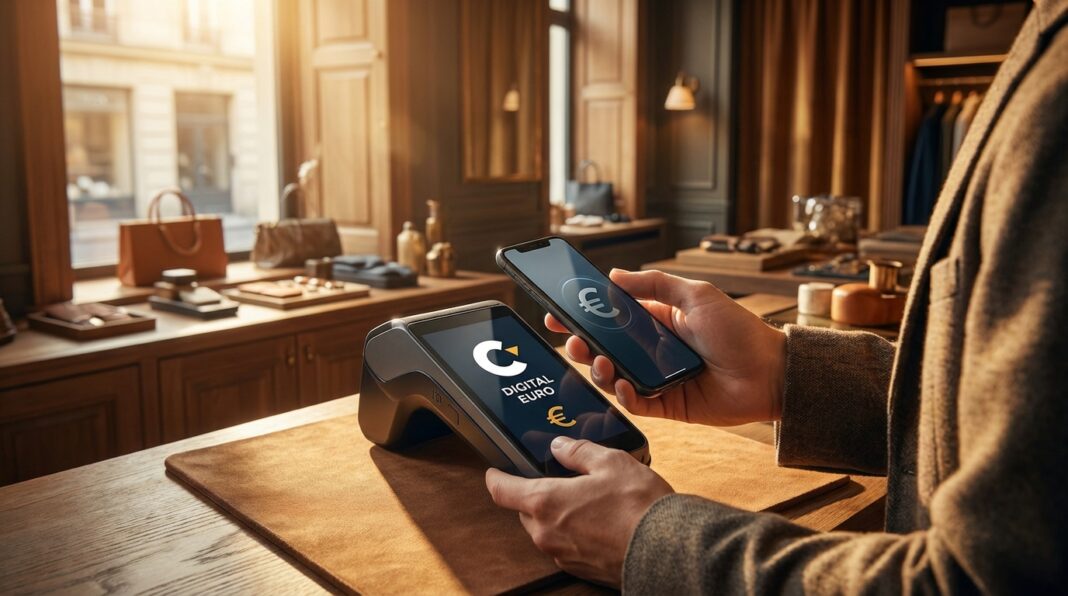

The European Central Bank is pressing its case for a digital euro both as a consumer payments tool and as a strategic hedge to reduce dependence on foreign payment systems. Piero Cipollone said the digital euro is easy to use and can be used everywhere in Germany and across the entire euro area. The project aims to be all-inclusive, covering small shops and people without smartphones, and the ECB says the digital euro will be free for basic use and will be like cash in digital form; coins and banknotes will remain available and no one will be forced to switch.
The ECB intends the digital euro to be based on European technology and not to depend on non-European providers. The project is designed to create the payments plumbing and public money that would enable European private payment solutions to scale across borders. The ECB warned that today US corporations own critical parts of the payments infrastructure and could in theory cut Europe off, and that a European infrastructure would provide alternative rails. The ECB also noted that delays in standards and acceptance rules could increase reliance on foreign payment systems.
The ECB presents the digital euro as a simple, everyday payment method that can be used across Germany and the entire euro area. The project is designed to be all-inclusive, aiming to operate in small shops and to serve people who do not have smartphones. Piero Cipollone said usability will extend to ordinary retail environments so the digital euro functions as a consumer payments tool. Every retailer that accepts digital payments today will in future be required to accept the digital euro as well.
The ECB says retailers will benefit from significantly lower fees because the central bank provides the underlying payments infrastructure, reducing costs for merchants. The digital euro will be free for basic use and intended to be like cash in digital form; coins and banknotes will remain available and no one will be forced to switch. The project is framed as creating the public payments plumbing that enables European private payment solutions to scale across borders, and the ECB warned that delays in standards and acceptance rules could increase reliance on foreign payment systems.
A mid-2029 launch for the digital euro has been described as a reasonable and realistic timeline. Piero Cipollone said the digital euro is easy to use and can be used everywhere in Germany and across the entire euro area, indicating broad geographic availability is an objective for the project. The programme’s schedule has been presented alongside other operational design considerations for rollout. Stakeholders have been given mid-2029 as an indicative target for initial implementation.
The ECB says the digital euro will be free for basic use and will be like cash in digital form. Coins and banknotes will remain available, and the ECB has said no one will be forced to switch to the digital euro. The institution described the digital euro as an additional option alongside physical cash rather than a replacement. Basic transactions are intended to carry no fee for end users under the proposed structure.
The ECB says the digital euro is intended to be based on European technology and not to depend on non-European providers. The bank said that today US corporations own critical parts of the payments infrastructure and could, in theory, cut Europe off. The article notes a real-world example where US sanctions affected International Criminal Court judges’ card access, limiting their ability to pay across Europe. The ECB framed technological sovereignty as a safety and reliability concern for everyday payments.
The ECB says the digital euro would create the necessary payments plumbing and public money that would enable European private payment solutions to scale across borders. The institution argued that a European-owned infrastructure would provide alternative rails if one provider dropped out. It also warned that delays in standards and acceptance rules could increase reliance on foreign payment systems. The project is presented as a strategic measure to reduce foreign dependence in payments.
A notable instance of foreign dependence impacting financial transactions occurred when US sanctions blocked the International Criminal Court (ICC) judges’ card payments across Europe. The sanctions led to restrictions imposed by Visa and Mastercard, which limited the judges’ ability to make payments throughout the continent. This situation highlighted vulnerabilities in relying on non-European payment systems that can be influenced by external political pressures.
The introduction of a digital euro is seen as a strategic solution to overcome such limitations. By utilizing a euro-area currency unbound to foreign-owned infrastructure, the digital euro would enable seamless payments across Europe, even in scenarios where traditional payment providers might be compromised. It represents a move towards establishing a sovereign European payments infrastructure that reduces reliance on foreign entities and ensures uninterrupted financial transactions within the euro area.
National cards often route through international schemes for cross-border and online use rather than relying solely on domestic rails. The original reporting notes that some euro-area countries lack domestic payment systems, creating dependence on external schemes for cross-border and online functionality. Those arrangements make cross-border payments and online acceptance contingent on international infrastructure and providers. The ECB warned that delays in standards and acceptance rules could increase reliance on foreign payment systems.
The digital euro would create the necessary payments plumbing and public money that would enable European private payment solutions to scale across borders. The project is intended to be based on European technology and not to depend on non-European providers. A European-owned infrastructure would provide alternative rails for domestic solutions and reduce dependence on international schemes.
The ECB presents the digital euro as an easy-to-use payment method usable across Germany and the entire euro area, and the project is intended to be all-inclusive, covering small shops and people without smartphones; the ECB says every retailer that accepts digital payments today will in future be required to accept the digital euro. The ECB has stated retailers will see significantly lower fees because the central bank provides the underlying payments infrastructure. The digital euro is intended to be based on European technology and not to depend on non‑European providers, and it is presented as a strategic measure to create the payments plumbing and public money that enables European private payment solutions to scale across borders and to provide alternative rails to foreign-owned infrastructure. A mid‑2029 launch has been described as a reasonable and realistic timeline; the ECB says the digital euro will be free for basic use, will be like cash in digital form, and coins and banknotes will remain available so no one will be forced to switch.