







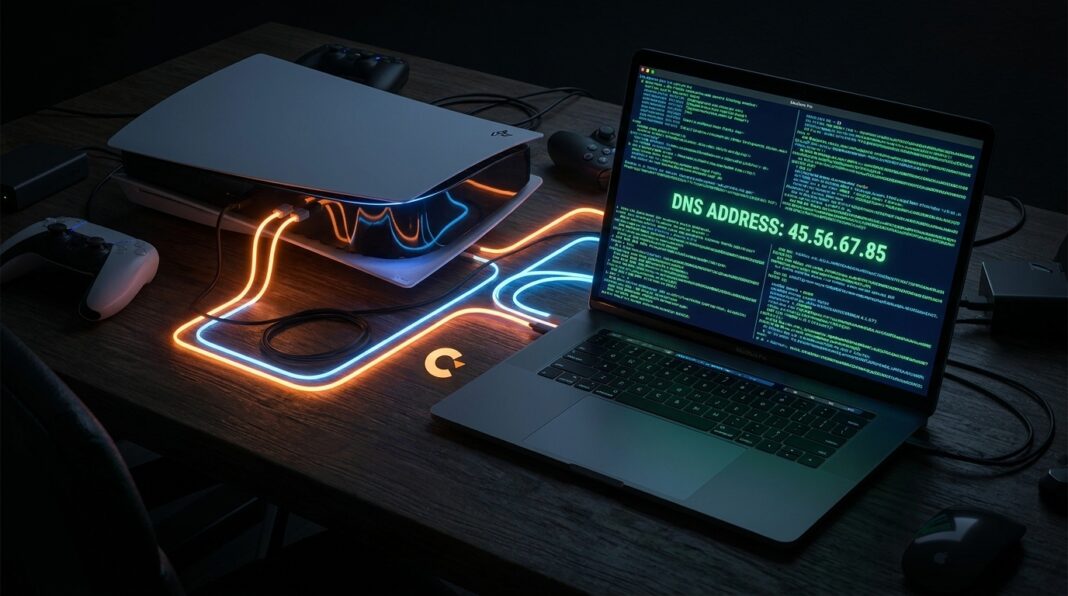

Relapse is a public PS5 jailbreak that works on firmware 7.00 through 13.60 and requires setting the PS5’s primary DNS to 45.56.67.85 and loading a URL to trigger the exploit. The jailbreak chains two attacks to achieve code execution on the console and is tethered, meaning it stops working after a reboot until the exploit is run again. The project code is published on GitHub under an MIT license.
The exploit chain begins with a WebKit stage and proceeds to a kernel-stage exploit to escalate privileges on the console. The implementation includes the statement “WebKit may need several attempts” and reports that the kernel stage can hang or panic. Those components enable the exploit sequence that runs on the device during the attack.
Relapse includes an ELF loader used to run homebrew applications and game backups on the console. The project code is published on GitHub under an MIT license. Repository materials include the statement that the code is for “educational and security research purposes only” and that it does “not endorse piracy”. The ELF loader is described as the mechanism for running those binaries on the console.
Using Relapse may lead to system failures, data loss, or account bans. Those risks are identified in the public reporting on the jailbreak.
In June, a class action was filed in the Northern District of California alleging that Sony’s Buy Now button misleads consumers about ownership of digital games. The complaint alleges consumers were misled into believing they owned digital copies purchased through Sony’s platform. Sony’s legal position in the case is that software is licensed, not sold, and that consumers do not legally own the games. Sony has sought to move the dispute to private arbitration, and the judge has not yet ruled on that request.
Relapse distinguishes between ownership questions (legal ownership) and what a user can do with the machine they purchased. This distinction separates legal ownership from the practical rights to run software on purchased hardware. The legal dispute and public discussion of the jailbreak touch broader consumer rights issues, including the right to repair. In jailbreak history, Apple versus Justin Freeman is cited as a notable case; Justin Freeman won that case.
The matters involve consumer rights and the right to repair. The arbitration request remains pending before the judge.
Apple v. Justin Freeman is cited as a notable jailbreak legal precedent. The case is referenced in reporting on the PS5 jailbreak Relapse. Justin Freeman won the case.
Using Relapse carries risks including system failures, data loss, and account bans. The jailbreak is tethered and stops working after a reboot until the exploit is run again. The implementation notes that WebKit may need several attempts and that the kernel stage can hang or panic. The project code is published on GitHub under an MIT license and includes statements that it is for educational and security research purposes only and that it does not endorse piracy.
The technical elements and ongoing legal disputes illustrate intertwined technical and legal questions around Relapse. The matter touches broader consumer rights and the right to repair. The public reporting identifies the risks of system failures, data loss, and account bans.