







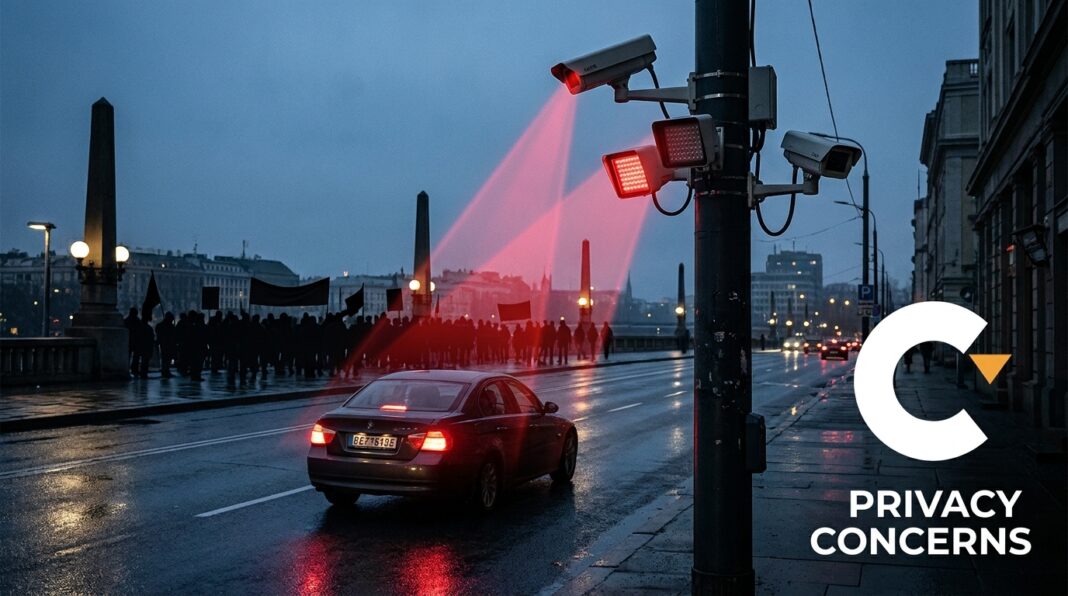

Public opposition to Flock Safety’s automated license plate reader cameras has spread from city council meetings to Capitol Hill, where lawmakers are preparing legislation to block federal funding for agencies that deploy the technology. The Institute for Justice identified over two dozen cases of officers who resigned or were arrested for allegedly using ALPR systems to stalk partners, and activists vandalized cameras in June and July with reports of at least 33 incidents across 23 states.
In February, Milwaukee prosecutors charged an officer accused of using the system to track a romantic partner and her former partner. The Institute for Justice identified over two dozen cases nationwide in which officers resigned or were arrested for allegedly using automated license plate reader systems to stalk current or former romantic partners. The Electronic Frontier Foundation reported that agencies searched license plate databases during protests, including the No Kings protests in 2025.
In July, an internal affairs detective who had investigated the Milwaukee case was arrested after authorities alleged he also used Flock to track people for personal reasons. Authorities described the detective’s alleged actions as using the Flock system to locate or follow individuals for private purposes. The July arrest followed the February criminal charge in Milwaukee.
Both incidents were reported as criminal matters involving alleged personal misuse of license plate reader systems. They were included in broader documentation of law enforcement misuse of ALPR technology.
Flock Safety sells internet-connected license plate reader cameras that photograph passing vehicles and read license plates. The system uses computer vision to identify characteristics such as make, model, color, decals, roof racks, and other distinguishing features. Flock Safety was founded in 2017 and is Atlanta-based.
Flock says its cameras do not use facial recognition. Flock says the cameras typically retain data for 30 days unless local laws require a different retention period. Retention periods can be altered to comply with local legal requirements.
Participating law enforcement agencies can search the database during criminal investigations. Agencies can receive alerts when vehicles linked to cases pass a camera. Law enforcement can use the system to recover stolen vehicles and locate missing people.
Rep. Thomas Massie has proposed legislation to block federal funding for agencies that deploy Flock Safety’s automated license plate reader technology. Reporting says public opposition has moved from city council meetings to Capitol Hill as lawmakers prepare such measures. The Electronic Frontier Foundation reported that agencies searched license plate databases during protests, including the No Kings protests in 2025. EFF also reported that Texas deputies queried Flock data during an abortion investigation described as a missing-person case.
Activists targeted the cameras during June and July, spray-painting, taping over, disabling and destroying units, according to reporting. The Guardian identified at least 33 incidents of vandalism across 23 states. Those actions were described in coverage as part of a broader backlash over privacy concerns related to automated license plate readers. The reporting also recorded instances of law enforcement officers being accused of misusing the systems for personal purposes.
Coverage therefore documents both legislative efforts to restrict federal funding and widespread activist vandalism of Flock cameras. These items were included in published reporting on the technology.
Privacy concerns about Flock Safety’s automated license plate reader cameras have escalated from city council debates to congressional attention, prompting proposed legislation to block federal funding for agencies that deploy the technology and prompting activist actions that targeted cameras across multiple states. Reporting documented instances of alleged law enforcement misuse and widespread vandalism of cameras in June and July. Flock’s CEO Garrett Langley said the company takes privacy concerns seriously and said many critics reconsider once they understand that the system photographs vehicles rather than using facial recognition and that data is typically retained for 30 days.