







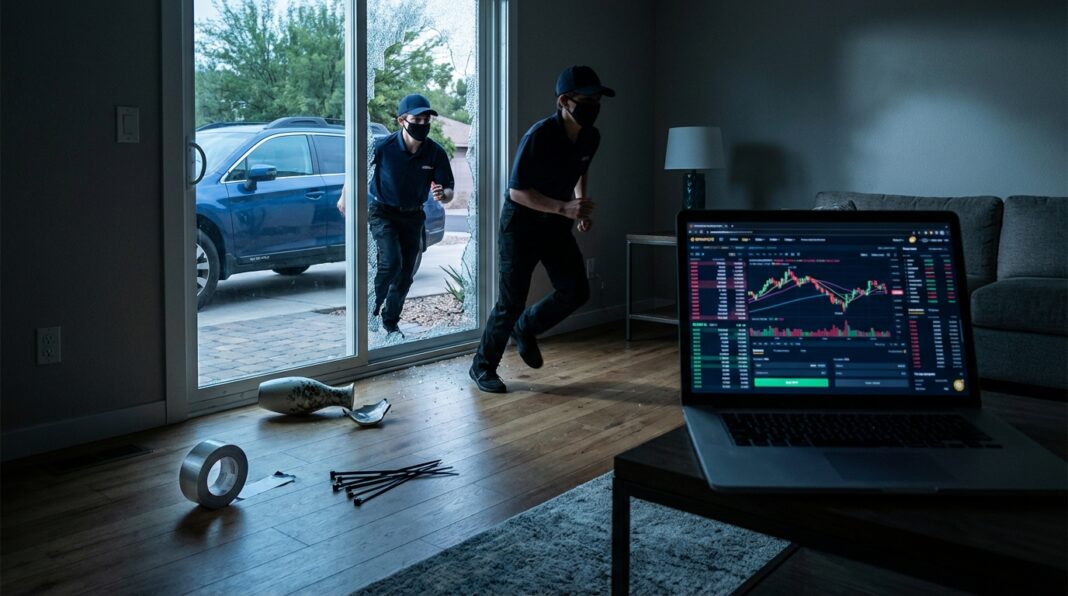

Arizona home invasion targeting cryptocurrency worth $66 million
Arizona home invasion targeting cryptocurrency worth $66 million involved two California teenagers, 16 and 17, charged with felony counts after traveling more than 600 miles from San Luis Obispo County to Scottsdale’s Sweetwater Ranch and arriving on Jan. 31. They arrived wearing delivery-style uniforms, forced entry, restrained two adults with duct tape and demanded access to digital assets worth about $66 million before fleeing in a blue Subaru that was stopped at a dead end. They were held in juvenile detention and were released on $50,000 bail with electronic monitoring.
The suspects forced entry into the residence and restrained two adults using duct tape. They demanded access to digital assets, including cryptocurrency valued at about $66 million. One victim denied holding cryptocurrency, and the confrontation escalated to physical assault after that denial. The attempt to obtain access to the victims’ digital assets involved direct physical coercion inside the home.
An adult son alerted police during the incident, and responding officers found a struggle inside the home and a victim screaming. The suspects fled the scene in a blue Subaru following the confrontation. Law enforcement pursued the vehicle and the blue Subaru was stopped at a dead end. Officers detained the suspects at that location.
Law enforcement recovered items connected to the incident, including zip ties and duct tape. Stolen license plates and a 3D-printed firearm without ammunition were also recovered. The functionality of the 3D-printed firearm was reported as unclear. The recovered materials matched items described in reports of the forced entry and restraint.
The Arizona home invasion incident is part of a broader increase in wrench attacks, where physical force is used to steal digital assets. The plot allegedly involved guidance from anonymous contacts known as ‘Red’ and ‘8’, who communicated via the encrypted messaging app Signal. These contacts reportedly provided around $1,000 for disguises and equipment used by the suspects. This tactic is reflective of a trend where criminals exploit leaked personal data to identify and target individuals.
In 2025, Jameson Lopp’s database recorded approximately 70 wrench attack incidents. The Scottsdale event marks the first documented incident in the U.S. in 2026. The perpetrators, often young recruits, are chosen to reduce traceability in these crimes. Despite similar patterns, authorities have found no connection between this Arizona case and other crypto ransom demands reported in Tucson. A sense of warning is attached to these incidents, as evidenced by sentiments like the quote, “Glad to see justice served – hope this serves as a warning to others.”
Glad to see justice served – hope this serves as a warning to others.